.png)
Best Time of Day for Crab Island: A Tidal Guide
Table of Contents
Understanding Crab Island's Tidal Cycle
Morning vs. Afternoon: What Changes Throughout the Day
Reading Crab Island Tide Charts for Optimal Timing
Water Clarity, Visibility, and Light Conditions
Crowd Levels and Peak Hours Throughout the Day
How to Stay Safe at Crab Island Sandbar
Seasonal Weather Patterns and Planning Your Visit
Frequently Asked Questions
Last Updated: October 2, 2026
Understanding Crab Island's Tidal Cycle
The best time of day for Crab Island depends fundamentally on understanding how tides shape the entire experience. Crab Island's unique sandbar ecosystem exists because of the dramatic tidal shifts that occur in the Gulf of Mexico. The tide cycle runs roughly 24 hours and 50 minutes, meaning high and low tides shift about 50 minutes later each day. This isn't random, it's governed by lunar cycles and the geometry of the coastline. When you understand this rhythm, you can time your visit to hit the sandbar when conditions are most favorable for swimming, anchoring, and visibility.
Timing your visit around the tide window is a significant factor in determining whether you'll have a memorable experience or a frustrating one. The difference between arriving during slack tide (the brief window between tidal shifts) versus fighting a strong current can mean the difference between a relaxing afternoon and an exhausting one. Most casual visitors don't think about tides until they're already on the water, by then, it's too late to adjust.
The tidal range at Crab Island typically spans 2-4 feet, which doesn't sound dramatic until you realize that a 2-foot drop can expose or submerge critical sections of the sandbar. During low tide, the sandbar expands significantly, creating shallow, calm water perfect for families. During high tide, the sandbar shrinks and currents become more pronounced. Understanding which phase of the cycle you're entering is essential planning.
Pro Tip Check the tide chart the night before your visit. The timing shifts daily, so what worked last week won't work this week. A simple rule: if you want the calmest water and maximum sandbar exposure, aim for the two hours surrounding low tide.
Morning vs. Afternoon: What Changes Throughout the Day
Morning arrivals offer distinct advantages that afternoon visitors simply don't get. The water is typically calmer in early morning because wind hasn't had time to build up throughout the day. Coastal winds tend to accelerate from late morning through afternoon, creating choppier conditions by 2-3 PM. If you're planning a visit where water clarity and smooth conditions matter, say, for a romantic sunset cruise or a family outing, morning departure can offer an advantage.
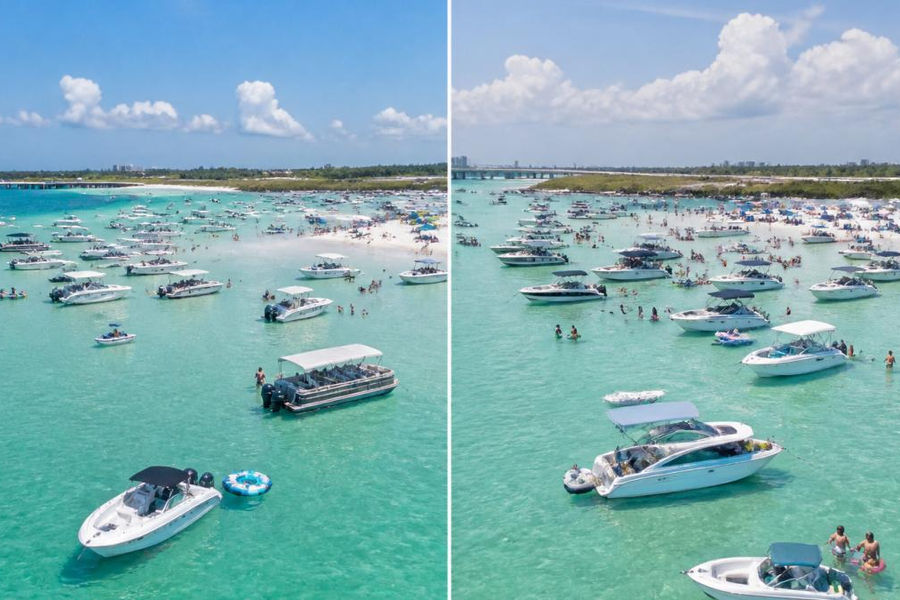
The crowd dynamics shift dramatically between morning and afternoon. Most tour operators and casual visitors arrive between 11 AM and 3 PM, which means the sandbar becomes congested during those peak hours. If you value a more private experience, arriving before 10 AM or after 4 PM gives you access to the sandbar with far fewer boats anchored nearby. The water clarity also tends to be better in morning light, with less suspended sediment stirred up by earlier boat traffic.
Water temperature varies minimally throughout the day, typically staying within 1-2 degrees. However, UV index peaks between 10 AM and 3 PM, which means afternoon visitors face stronger sun exposure. If sun protection is a concern, morning visits reduce your UV exposure significantly. The angle of the sun also affects visibility, morning light comes from behind you as you face the water, while afternoon sun can create glare that reduces your ability to see marine life and the sandbar's topography.
Afternoon visits do have one advantage: the light quality shifts to warmer tones as the sun lowers, creating better photography conditions. If capturing the perfect photo of the emerald water is your priority, late afternoon (after 4 PM) offers superior lighting. The tradeoff is accepting rougher water conditions and sharing the sandbar with more boats.
Reading Crab Island Tide Charts for Optimal Timing
A tide chart is your roadmap to visiting Crab Island at the right moment. The chart shows predicted high and low tide times for each day, along with the height of the water level at those points. Reading one is straightforward: the vertical axis shows water depth in feet, and the horizontal axis shows time. The curve rising means the tide is coming in; the curve falling means it's going out.
The key to using a tide chart effectively is identifying slack tide, the brief window when the tide transitions from incoming to outgoing or vice versa. During slack tide, currents are minimal and the water is calmest. This window typically lasts 20-30 minutes. Arriving 30 minutes before slack tide and staying through it gives you the smoothest conditions for anchoring and swimming. Most visitors miss this entirely because they don't check the chart ahead of time.
The tide chart also shows you the magnitude of the tidal range for each day. Some days have a 2-foot range; others have 4 feet. A larger range means more dramatic changes in sandbar exposure and current strength. Planning your visit for a day with a smaller tidal range gives you more forgiving conditions, especially if this is your first time visiting Crab Island.
Watch Out Ignoring the tide chart and arriving during peak incoming or outgoing tide can create dangerous currents, particularly if you're anchoring or swimming. Strong currents make boat handling difficult and can sweep swimmers away from the sandbar. Always check the chart before departing.
Water Clarity, Visibility, and Light Conditions
The emerald water that makes Crab Island famous isn't always equally clear. Water clarity depends on several factors: recent rainfall (which increases sediment runoff), wind conditions (which stir up the bottom), and tidal phase. During low tide, the sandbar is shallower and the water appears more vivid emerald because you're looking at the sand bottom through a thin layer of water. During high tide, the water is deeper, appears darker, and visibility decreases.
Morning light typically offers better visibility because the sun angle is lower and less refracted by the water surface. Midday sun creates more glare, which actually reduces your ability to see into the water despite brighter conditions. The best visibility occurs on calm, clear mornings during low tide, the combination of shallow water, minimal wind, and optimal light angle.
Water temperature remains relatively stable throughout the day (typically 82-86°F in summer), but the perceived comfort depends on wind conditions. A 15-knot wind in the afternoon can make the water feel cold despite its actual temperature. Morning visits, with typically lighter winds, feel more comfortable for extended swimming.
The UV index peaks at solar noon and remains elevated until 3 PM. If you're spending several hours on the sandbar, morning visits can reduce your sun exposure compared to afternoon visits.
Crowd Levels and Peak Hours Throughout the Day
Peak hours at Crab Island run from 11 AM to 3 PM, particularly on weekends. During these hours, the sandbar can host 30-50 boats anchored simultaneously, creating a crowded, party-like atmosphere. If that appeals to you, time your visit accordingly. If you prefer a quieter experience with more space and fewer people, early morning (before 10 AM) or late afternoon (after 4 PM) are dramatically different experiences.
Weekday mornings are the sweet spot for solitude. Tuesday through Thursday mornings typically see fewer than 10 boats on the sandbar. Weekends, by contrast, can have 40+ boats by noon. If your priority is a private or semi-private experience, weekday mornings are non-negotiable.
Seasonal variation also affects crowds. Summer months (June-August) bring peak tourism and maximum congestion. Spring (March-May) and fall (September-November) offer better crowd management while maintaining warm water and good visibility. Winter months are quieter but water temperatures drop to 65-70°F, which many visitors find uncomfortable for extended swimming.
The crowd composition also changes by time of day. Morning visitors tend to be families and serious boaters; afternoon visitors skew toward party groups and tour operators. If you're planning a romantic or family-focused visit, morning timing helps you avoid the louder, more boisterous atmosphere that develops by mid-afternoon.
How to Stay Safe at Crab Island Sandbar
Safety at Crab Island depends primarily on understanding currents and respecting the tidal cycle. The strongest currents occur during peak tidal flow, roughly 2-3 hours after high tide begins and 2-3 hours after low tide begins. Arriving during slack tide dramatically reduces current-related hazards. Swimmers should never enter the water during strong outgoing tide, as the current can carry them away from the sandbar faster than they can swim back.
Anchoring correctly is essential for safety.
Key Takeaway The safest time to visit Crab Island is during slack tide on a calm morning with light winds. This combination, slack tide + morning + light winds, can reduce many of the hazards that create problems for visitors. Afternoon visits during strong tidal flow and high wind conditions can be riskier.
Seasonal Weather Patterns and Planning Your Visit
Seasonal variation dramatically affects your Crab Island experience. Summer (June-August) offers warm water (84-87°F) and reliable conditions, but crowds are at their peak and afternoon thunderstorms are common. If you're visiting in summer, morning departures help you finish before afternoon storm development. Water clarity is generally good, though summer heat can increase algae growth in shallow areas.
Frequently Asked Questions
What's the best time of day to visit Crab Island for clear water?
Water clarity peaks during the 2-4 hours following low tide, when sediment has settled and sunlight penetrates deeper. Morning visits between 8 AM and 11 AM typically offer the clearest conditions, especially if low tide falls in that window. Check your local Crab Island tide charts the night before to identify the exact low tide time for your visit date, then plan arrival 30-60 minutes after that window closes.
Is Crab Island better in the morning or afternoon?
Morning visits offer calmer water, fewer crowds, and superior visibility for swimming and snorkeling. Afternoon visits see increased boat traffic and higher water temperatures, which can reduce clarity. However, afternoon light creates better photography conditions if that's your priority. Weekday mornings provide the most tranquil experience with minimal crowd congestion.
How do tides affect water depth and safety at Crab Island sandbar?
Low tide exposes more sandbar, creating shallow wading zones ideal for families but reducing water depth for larger boats. High tide submerges portions of the sandbar and increases currents around the navigation channels. Always check tide predictions before departure. Slack tide (the period between tide changes) offers the calmest conditions for anchoring and water activities, typically lasting 20-40 minutes.
Is it better to visit Crab Island on a weekday or weekend?
Weekdays deliver significantly fewer boats, calmer anchoring conditions, and shorter wait times for water activities. Weekends attract 3-5 times more traffic, creating congestion and reduced privacy. If you're booking a private yacht charter for a romantic or family experience, weekday visits maximize your space and tranquility. Summer weekdays are especially quiet compared to peak weekend periods.
BOOK NOW

Comments